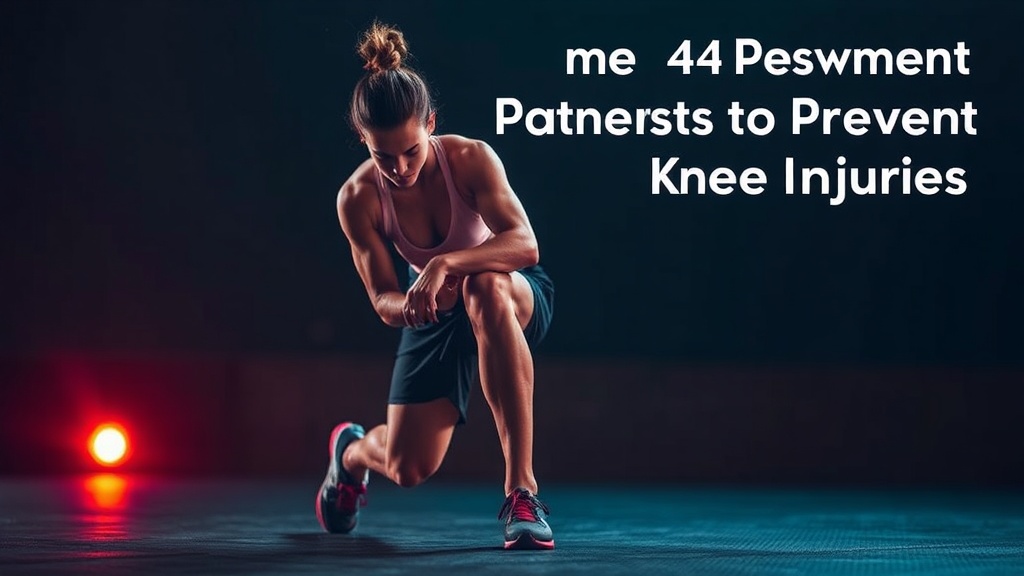
4 Movement Patterns to Prevent Knee Injuries

Single-Leg Balance Drills
Controlled Lateral Lunges
Tibialis Anterior Strengthening
Eccentric Squat Loading
The sound of a heavy landing on concrete echoes through a hollowed-out skatepark, followed by a sharp, sickening pop from a knee joint. It's a sound every skater dreads. Knee injuries—from patellar tendonitis to ACL tears—can sideline even the most dedicated riders for months. This article breaks down the four fundamental movement patterns you need to master to protect your joints and keep your sessions productive.
Skating is an asymmetrical, high-impact sport. We spend our lives absorbing force through our legs, often in awkward, unbalanced positions. If your body can't handle the impact, your knees will pay the price. By focusing on these specific movement patterns, you're building a physical foundation that supports your tricks rather than breaking down under them.
Why Do Skaters Get Knee Injuries?
Knee injuries in board sports usually stem from poor deceleration mechanics and insufficient lateral stability. When you land a trick or bail on a curb, your knees have to manage rapid force. If your muscles aren't trained to absorb that shock, the stress transfers directly to your ligaments and tendons. It's a simple physics problem: if the muscle doesn't act as a shock absorber, the joint takes the hit.
Most skaters focus solely on the "pop" or the height of the trick, but they forget about the landing. You can have incredible explosive power, but if you can't control the descent, you're asking for trouble. You might want to check out my previous piece on building explosive leg strength to ensure your power is backed by stability.
Common culprits include:
- Weak gluteal activation: If your glutes aren't firing, your knees often cave inward (valgus stress).
- Poor ankle mobility: Stiff ankles force the knee to compensate for a lack of range.
- Lack of eccentric control: Being able to "brake" during a landing is just as important as the jump itself.
1. The Squat Pattern (Vertical Stability)
The squat pattern is the bedrock of lower-body strength. For skaters, this isn't just about lifting heavy weights; it's about maintaining a neutral spine and upright posture while under load. A functional squat helps you manage the vertical forces encountered during heavy landings or when dropping down stairs.
When you perform a squat, your hips, knees, and ankles move in unison. If you have a "knee-dominant" squat where your knees shoot way past your toes without hip engagement, you're putting unnecessary pressure on the patella. Training the hip-hinge component alongside the squat is a great way to redistribute that load.
The Drill: Goblet Squats
Hold a kettlebell or even a heavy water jug at your chest. This keeps your center of mass forward, helping you stay upright. Focus on driving your knees outward as you descend—don't let them cave in. This mimics the stability needed when landing a trick on a flat surface.
2. The Hinge Pattern (Posterior Chain Strength)
The hinge pattern involves moving at the hips rather than the knees. This is the single most effective way to protect your ACL. Most skaters are "quad-dominant," meaning they use the front of their legs for everything. While quads are great for popping, the posterior chain—your glutes, hamstrings, and lower back—is what actually stabilizes the knee during high-impact events.
Think about a heavy stomp on a transition. If your hamstrings and glutes are weak, your quads will take the brunt of that deceleration, leading to tendonitis. Strengthening the hinge pattern ensures you have a "braking system" for your body.
The Drill: Romanian Deadlifts (RDLs)
Using a barbell or a pair of dumbbells, hinge at the hips while keeping a slight bend in the knees. The goal is to feel a stretch in the hamstrings. This builds the eccentric strength required to absorb force during a heavy landing. It's a different kind of strength than a standard deadlift—it's about control and tension.
3. The Lateral Movement Pattern (Side-to-Side Stability)
Skating is rarely a straight line. Whether you're carving a bowl or dodging an obstacle, you're constantly moving through the frontal plane. Most traditional gym workouts are strictly forward and backward (sagittal plane), which leaves a massive gap in your athletic profile. If you can't move laterally, your knees are vulnerable to twisting forces.
Developing lateral strength helps prevent "valgus collapse," which is when your knee dives inward during a turn or a bad landing. This is often where ACL injuries happen. You need to train your body to resist these lateral forces.
| Movement Pattern | Focus Area | Example Exercise |
|---|---|---|
| Squat | Vertical Force Absorption | Goblet Squat |
| Hinge | Posterior Chain/Deceleration | Single-Leg RDL |
| Lateral | Side-to-Side Stability | Lateral Lunges |
| Rotation | Core/Torso Control | Woodchoppers |
The Drill: Lateral Lunges
Step out to the side, keeping one leg straight and bending the other. This builds strength in the adductors and gluteus medius. It's much more useful for a skater than a standard linear movement. It's also a great way to increase your hip mobility (which, as I've mentioned before, is a huge part of improving your board control).
4. The Single-Leg Balance Pattern (Unilateral Strength)
Skating is essentially a series of single-leg movements. You push with one foot, you land on one foot, and you balance on one foot during a grind. If you only train with two feet on the ground, you're leaving yourself exposed. Unilateral training forces your stabilizer muscles to work harder, which is exactly what happens when you're mid-ollie.
Training on one leg improves proprioception—your brain's ability to sense where your limbs are in space. This is a game-changer for avoiding "clumsy" injuries where a foot slips or a board kicks out. It's about teaching your nervous system to react to instability before it happens.
The Drill: Single-Leg Romanian Deadlift
This is a hybrid of the hinge and the single-leg pattern. Balance on one leg, hinge forward at the hips, and keep your back flat. This builds incredible stability in the ankle and the knee. It's tough, but it's the kind of work that pays off when you're navigating a technical line.
The goal isn't to become a bodybuilder. You're a skater. You want a body that is resilient, adaptable, and capable of handling the chaos of the street or the park. These four patterns—squat, hinge, lateral, and single-leg—provide the framework. If you neglect one, you're building a house on sand. For more on the neurological side of things, you might find improving your reaction time useful for handling those sudden shifts in balance.
Don't wait for a pop or a sharp pain to start caring about these movements. By the time you're actually injured, the damage is already done. Incorporate these patterns into your weekly routine—even if it's just two days a week—to ensure your knees stay as strong as your ollie. For more detailed anatomical information on how joints function, you can always check out the Wikipedia page on the knee.