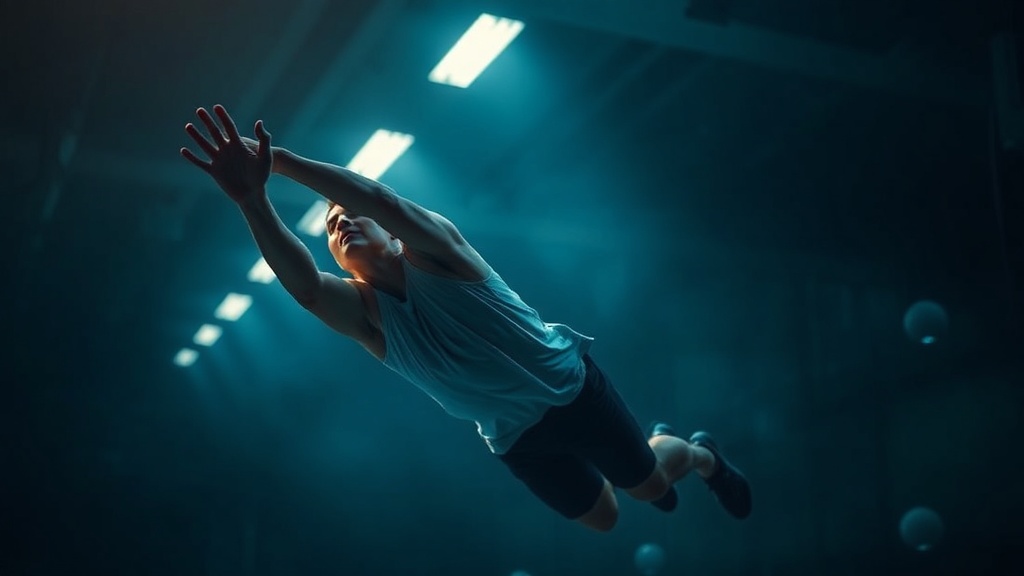
Can Stronger Shoulders Help You Fall Without Getting Hurt?

Why Do Most Skaters Ignore Upper Body Training?
Here is something that might catch you off-guard: roughly 70% of skateboarding injuries involve the upper extremities — wrists, elbows, and shoulders taking the brunt when a trick goes sideways. Yet walk into any skate shop and ask about training, and you will hear endless chatter about leg strength, pop techniques, and core stability. The upper body barely gets a mention. That blind spot is costing skaters — sprained wrists, separated shoulders, and elbow fractures are keeping people off their boards for weeks at a stretch.
Most of us learn to fall by instinct. We throw our hands out without thinking, absorbing impact through locked elbows and fragile wrist joints. It works until it doesn't. The problem is not the reflex itself — it is the lack of preparation for that moment. Your shoulders, scapular stabilizers, and forearm muscles can be trained to distribute force more intelligently, reducing the trauma that travels through your joints when you eat pavement. This is not about bulking up or looking like a gym rat. It is about building resilient tissue that responds better under sudden load. Think of it as insurance you collect before you need it.
The culture of skateboarding has always favored raw street credentials over structured preparation. There is a strange pride in just skating until your body adapts or breaks. That romanticism ignores reality — the human body has weak links, and the shoulder girdle is one of them. The glenohumeral joint (your main shoulder joint) is inherently unstable by design, sacrificing bony stability for range of motion. That mobility is great for reaching and grabbing, but terrible for absorbing冲击力 when you slam. Without muscular support from the rotator cuff and surrounding scapular muscles, that instability translates directly to injury risk. You would not ride loose trucks without tightening them occasionally — your shoulders deserve the same maintenance.
What Muscle Groups Actually Protect You During a Bail?
When you fall, your body executes a complex chain reaction. The first point of contact — usually the hands — sends force upward through the wrists, into the elbows, and finally the shoulders. Along that path, several muscle groups determine whether you walk away shaken or sidelined. The rotator cuff — four small muscles wrapping your shoulder joint — acts as a dynamic stabilizer, keeping the humeral head centered in its socket under load. The serratus anterior (often called the "boxer's muscle") controls scapular movement, preventing your shoulder blade from winging out when impact hits. Then there are the forearm flexors and extensors, which govern wrist position and grip strength during the catch phase of a fall.
Most skateboarding-related upper body injuries occur because one or more of these groups is undertrained or firing out of sequence. A weak serratus anterior, for example, causes the scapula to tilt anteriorly — that rounded shoulder posture you see in people who spend too much time hunched over phones. When those rounded shoulders hit the ground, the joint is already compromised, increasing the likelihood of AC joint separations or rotator cuff strains. The fix is not complicated, but it requires consistency. Targeted exercises that wake up dormant stabilizers can rewire your movement patterns, teaching your body to recruit the right muscles when milliseconds count. Research published by the National Institutes of Health confirms that shoulder strengthening protocols significantly reduce upper extremity injury rates in board sports — the data is there, even if the skate community has been slow to adopt it.
How Can You Build Shoulder Stability Without a Gym?
You do not need a membership or fancy machines to bulletproof your upper body. Bodyweight movements, resistance bands, and simple isometric holds can create the stability you need. Start with scapular push-ups — assume a plank position and, without bending your elbows, sink and retract your shoulder blades. This wakes up the serratus anterior and teaches proper scapular control. Aim for three sets of twelve to fifteen reps, moving slowly and feeling every inch of the motion. These look easy but reveal weaknesses quickly — most people struggle to isolate the scapular movement without compensating through the lower back or hips.
Next, invest in a set of resistance bands — they cost less than a deck and travel anywhere. Face pulls become your best friend here. Anchor the band at face height, pull toward your temples with elbows high, and squeeze your shoulder blades together. This targets the posterior deltoids and external rotators — the muscles that decelerate your arm during a fall and protect the front of your shoulder. Three sets of fifteen reps, twice a week, creates noticeable changes in how your shoulders feel during sessions. Add band pull-aparts between tricks during rest periods; they take thirty seconds and accumulate volume without feeling like a workout.
For wrist and forearm resilience, towel hangs or simple wrist roller work builds the extensor strength that prevents the hyperflexion injuries so common in skating. Hang from a pull-up bar with a rolled towel gripped in each hand — the thick diameter forces forearm engagement. Start with twenty-second holds and build from there. If you have access to a light dumbbell or even a hammer, radial and ulnar deviations (slowly tilting the weight up and down) strengthen the small stabilizers around your wrist joint. These exercises are not glamorous. You will not post them on Instagram. But they create tissue capacity — the ability to handle load without tearing — and that matters more than aesthetics when you are rolling away from a sketchy landing at the bottom of a ten-stair.
When Should You Start This Training?
The obvious answer is now — before your next slam, not after. But practically, the best time is during your off-days from skating or immediately post-session when muscles are warm and responsive. Pre-session, stick to activation work — light band pull-aparts and scapular retractions that prime the nervous system without inducing fatigue. Post-session or on rest days, load the tissues more aggressively with the exercises described above. Consistency beats intensity every time. Ten minutes of targeted shoulder work, three times weekly, compounds into real structural change over three to six months. You will not notice it during easy sessions, but the first time you catch yourself on a sketchy fall and roll through without pain, you will understand the value.
Skateboarding will always carry risk — that uncertainty is part of what makes it compelling. But there is a difference between chosen risk and preventable injury. Your shoulders are not vanity muscles. They are load-bearing structures that determine whether a bail ends in a laugh or a trip to urgent care. Train them with the same intention you bring to learning a new flip trick, and your body will reward you with more years on the board.